

How the WARDJET X-Series transforms complex aluminum designs into precision-cut decorative metalwork.
Creating intricate metal artwork requires more than cutting a material into shape. Fine details, complex patterns, and consistent edge quality all contribute to the appearance and quality of the finished product.
For manufacturers working with decorative aluminum, maintaining precision throughout complex designs can present a significant fabrication challenge.
Waterjet cutting aluminum offers a versatile approach to producing intricate shapes, detailed patterns, and clean edges while minimizing secondary finishing requirements.
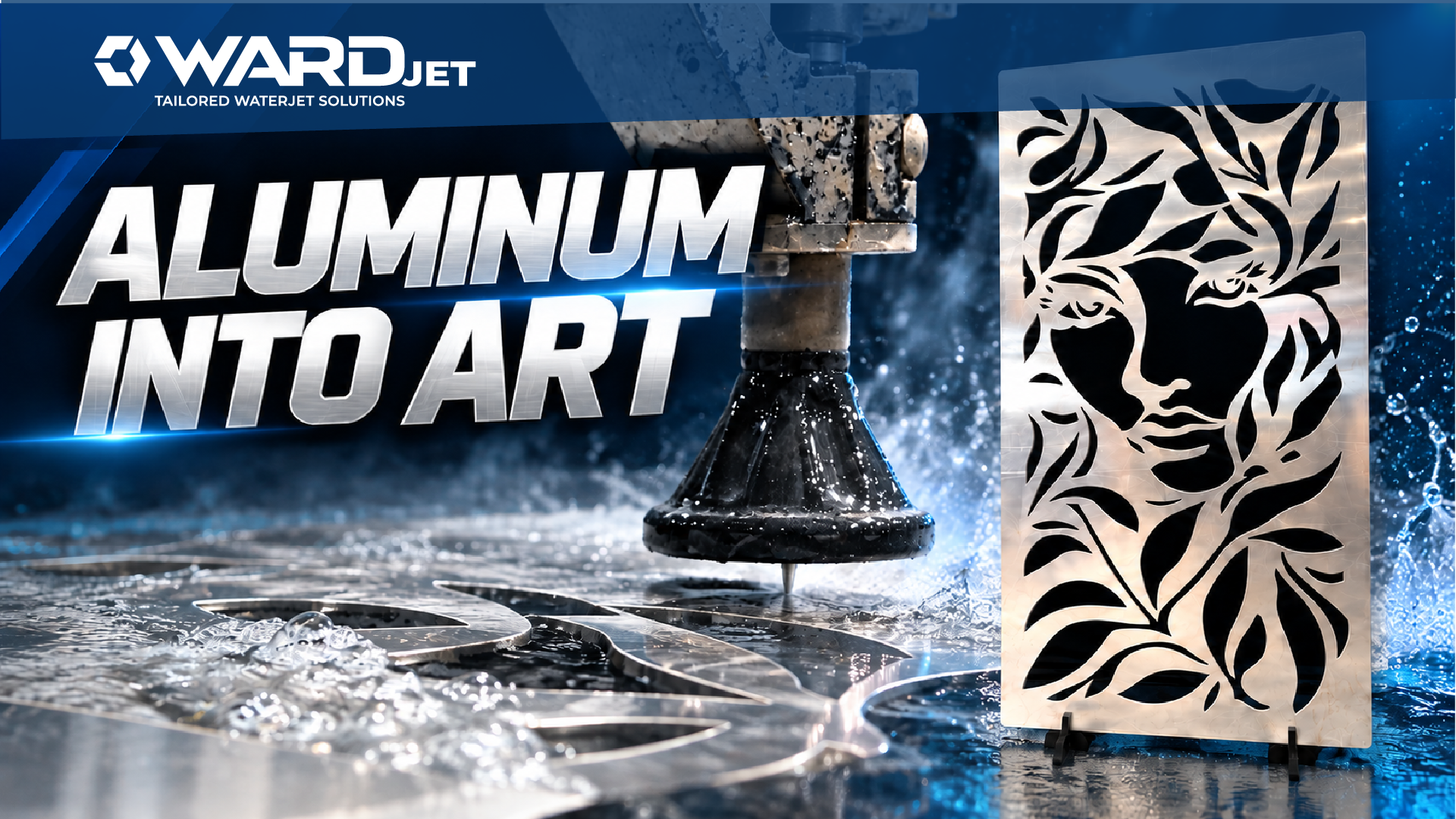
The WARDJET X-Series waterjet cutting system, equipped with an APEX-60 cutting head, demonstrates these capabilities through the precise cutting of intricate artwork from 1/8-inch aluminum.
What Is Waterjet Cutting for Aluminum?
Waterjet cutting is a material-cutting process that uses a high-pressure stream of water, typically combined with abrasive particles when cutting metals, to produce programmed shapes and profiles.
Unlike thermal cutting processes, waterjet cutting does not rely on heat to separate the material.
For aluminum fabrication, this provides several important advantages, including the ability to produce complex geometries without creating a heat-affected zone.
Waterjet technology is particularly useful for applications where intricate designs, detailed contours, and clean cut edges are important considerations.
Decorative metalwork is one such application.
The Challenge of Cutting Intricate Aluminum Designs
Decorative aluminum components often feature detailed patterns, narrow openings, complex curves, and multiple internal cutouts.
These characteristics make precision particularly important.
In decorative applications, the cut edges frequently remain visible as part of the finished artwork. Any inconsistency in the cutting process can influence the appearance of the final design.
Manufacturers must consider several factors when producing intricate aluminum components:
- Complex geometries: Reproducing detailed shapes accurately from a programmed design.
- Fine features: Cutting small openings and closely spaced design elements.
- Edge consistency: Maintaining clean edges throughout the artwork.
- Repeatability: Producing consistent results when designs need to be reproduced.
- Secondary finishing: Evaluating the amount of additional edge preparation required after cutting.
These requirements highlight why choosing an appropriate cutting process is important for custom decorative metal fabrication.
How the WARDJET X-Series Cuts Intricate Aluminum Artwork
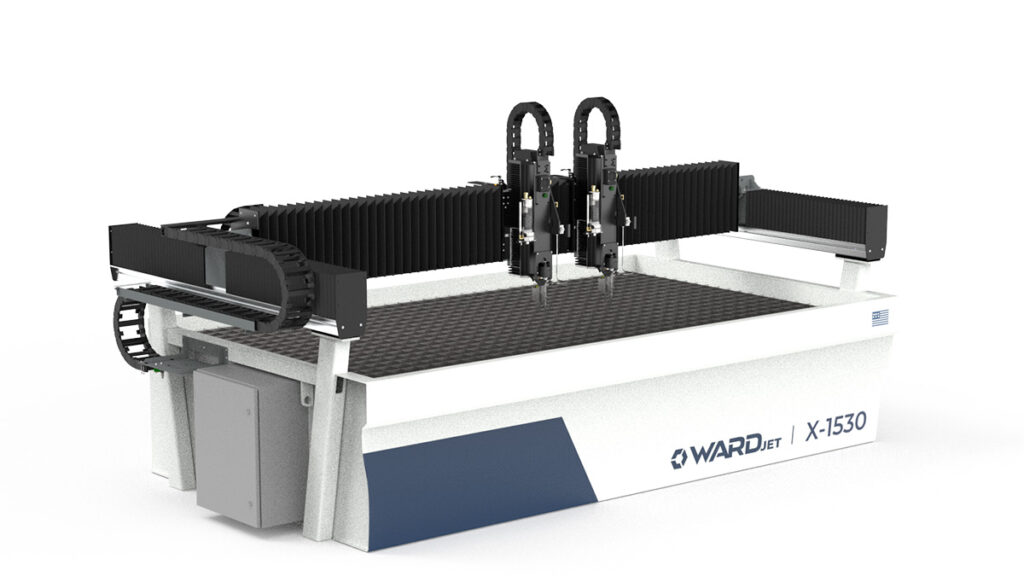
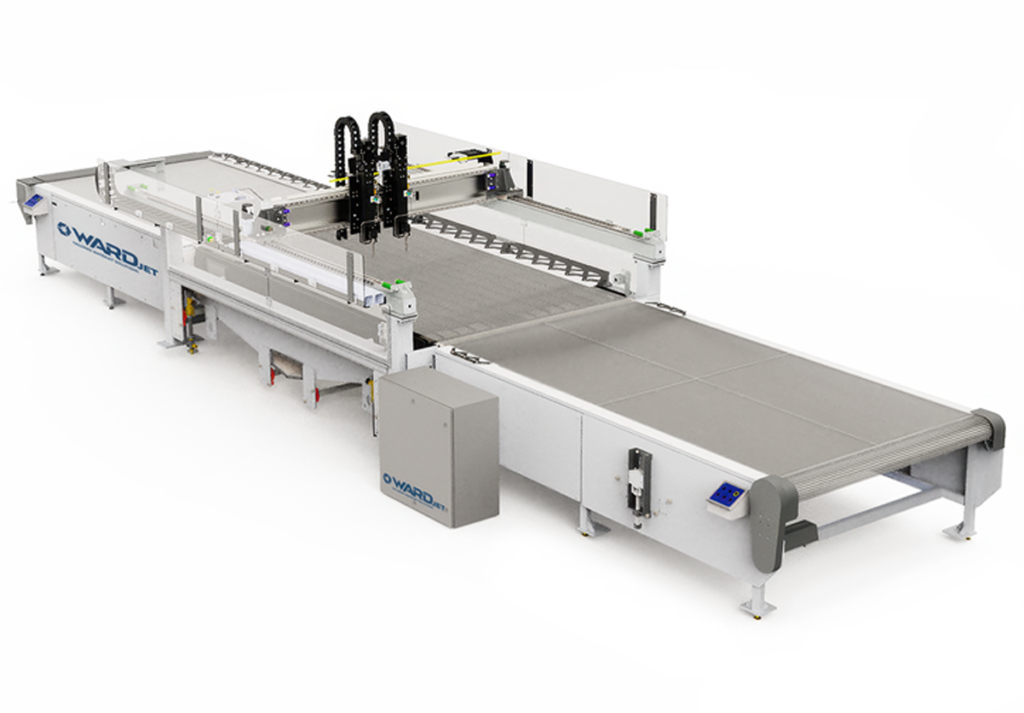
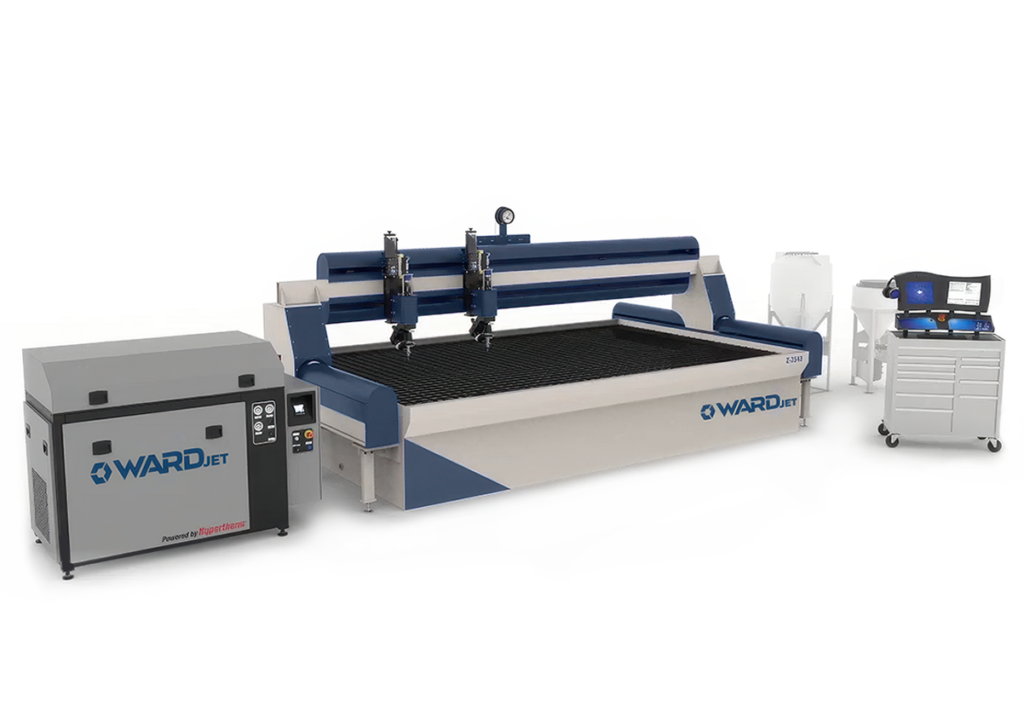
The WARDJET X-Series combines waterjet cutting technology with automated motion control to support accurate and repeatable cutting.
For intricate aluminum artwork, the system can follow a programmed cutting path to reproduce complex patterns and fine details.
In an application using 1/8-inch aluminum, the X-Series is equipped with an APEX-60 cutting head to produce detailed cuts across an intricate decorative design.
As the automated cutting process follows the programmed geometry, individual shapes and fine features take form.
The application highlights three important aspects of precision cutting:
1. Accurate Reproduction of Complex Designs
Intricate decorative patterns require the cutting system to follow detailed programmed paths.
The WARDJET X-Series uses automated motion control to guide the cutting process, allowing the design to be reproduced with accuracy and consistency.
This is especially relevant for artwork containing multiple openings, curved profiles, and detailed internal features.
2. Clean, Consistent Cut Edges
Edge quality is a critical consideration in decorative metal fabrication.
Because many decorative components display their cut edges, maintaining consistency throughout the design helps achieve the intended finished appearance.
The combination of the WARDJET X-Series and APEX-60 cutting head produces clean, precise cuts in the demonstrated aluminum artwork.
3. Reduced Secondary Finishing
Depending on the cutting process and application requirements, metal components may require additional finishing after cutting.
Clean, consistent waterjet-cut edges can help minimize this requirement.
In this aluminum artwork application, the cutting process produces clean edges that reduce the need for secondary finishing.
The extent of finishing required will still depend on the design, material, and intended final use.
Benefits of Waterjet Cutting for Decorative Aluminum Fabrication
Waterjet cutting provides several characteristics that make it worth considering for detailed aluminum fabrication.
Complex Design Capabilities
Waterjet cutting can follow programmed cutting paths to create intricate shapes and decorative patterns.
This makes the technology suitable for evaluating custom metal artwork that contains detailed internal features and complex outlines.
No Heat-Affected Zone
Waterjet cutting is a cold-cutting process.
Because material separation does not depend on thermal energy, it avoids the heat-affected zone associated with thermal cutting methods.
For manufacturers working with aluminum, this can be an important consideration when evaluating cutting methods.
Consistent Cutting Results
Automated motion control helps the cutting system follow programmed designs accurately and repeatedly.
This is useful when manufacturers need consistent reproduction of detailed patterns.
Clean Edge Quality
The condition of cut edges can influence both the appearance of decorative metalwork and the finishing required afterward.
The WARDJET X-Series application demonstrates clean edge quality across an intricate aluminum design.
Flexibility for Custom Designs
Decorative metal fabrication frequently involves unique shapes and custom geometries.
A programmable waterjet cutting system allows manufacturers to translate digital cutting patterns into physical components without requiring a dedicated cutting die for each design.
Applications for Precision Waterjet-Cut Aluminum
The ability to produce detailed aluminum patterns can be relevant to several decorative and custom fabrication markets.
Potential applications include:
- Decorative metal artwork: Intricate cutouts and custom artistic patterns.
- Architectural metal features: Decorative aluminum elements incorporating detailed designs.
- Custom signage: Aluminum letters, shapes, and design components.
- Interior design elements: Custom metal panels and decorative features.
- Custom metal fabrication: Specialized components requiring complex profiles.
Each application may have different requirements for material thickness, edge finish, dimensional accuracy, and production volume.
Manufacturers should evaluate these factors when determining the most appropriate waterjet cutting configuration.
Why Consider the WARDJET X-Series for Aluminum Cutting?
The WARDJET X-Series offers automated waterjet cutting capabilities for manufacturers evaluating applications that require accurate shape reproduction and consistent cutting results.
With the APEX-60 cutting head, the featured configuration demonstrates the ability to produce detailed artwork from 1/8-inch aluminum.
For businesses considering waterjet technology, the application highlights several useful evaluation criteria:
- Ability to reproduce intricate design features.
- Consistency of cutting across complex patterns.
- Quality of the resulting cut edges.
- Requirements for additional finishing.
- Suitability for the intended material and application.
These considerations help manufacturers assess how waterjet technology may fit their specific fabrication requirements.
Frequently Asked Questions About Waterjet Cutting Aluminum
Can a waterjet cut intricate designs in aluminum?
Yes. Waterjet cutting can produce intricate shapes, detailed patterns, and complex profiles in aluminum. The WARDJET X-Series, equipped with an APEX-60 cutting head, demonstrates this capability through detailed artwork cut from 1/8-inch aluminum.
Is waterjet cutting suitable for decorative aluminum artwork?
Yes. Waterjet cutting is well suited to evaluating decorative aluminum applications that require intricate geometries, detailed contours, and clean edges. The process follows programmed cutting paths, allowing complex designs to be reproduced accurately.
Does waterjet cutting create a heat-affected zone in aluminum?
No. Waterjet cutting is a cold-cutting process that does not use heat to separate the material. This eliminates the heat-affected zone associated with thermal cutting processes.
Can waterjet cutting reduce secondary finishing?
Waterjet cutting can produce clean, precise edges that help reduce secondary finishing requirements. In the WARDJET aluminum artwork application, clean edges are achieved with minimal additional finishing. Actual finishing requirements depend on the application and desired final appearance.
What cutting head is used with the WARDJET X-Series for intricate aluminum artwork?
The featured application uses the WARDJET X-Series equipped with an APEX-60 cutting head to create intricate artwork from 1/8-inch aluminum. The cutting head works with the system’s automated motion control to produce detailed shapes and consistent edges.
Bring Your Intricate Aluminum Designs to Life with WARDJET
Whether creating decorative metal artwork or exploring new custom fabrication applications, achieving consistent results across complex designs is essential.
The WARDJET X-Series, equipped with the APEX-60 cutting head, illustrates how precision waterjet cutting can transform intricate aluminum designs into detailed finished components.
By combining automated cutting control with clean edge quality, the system provides a practical solution for manufacturers seeking to explore detailed aluminum fabrication.
Looking for a waterjet cutting solution for your next aluminum fabrication project?
Explore WARDJET waterjet cutting solutions and connect with our team to discuss your material, design, and production requirements.