



Ask the Experts LIVE Webinar
What 2022 Taught Us About Waterjet and Router Performance—and What’s Coming Next
For manufacturers and fabricators, the end of the year is more than a calendar milestone. It is a chance to step back, review what improved production, identify recurring challenges, and plan smarter investments for the year ahead. In the CNC cutting world, that reflection often centers on the same questions: How can shops cut more efficiently? Which materials require a different approach? What software and machine options make the biggest difference in daily operations?
A year-end review of waterjet and router technology brings those questions into focus. Across 2022, key conversations in the industry revolved around software workflows, material-specific cutting strategies, machine maintenance, application fit, and system configuration. Taken together, these topics reveal an important truth: success with CNC equipment is not just about owning the right machine. It is about understanding how programming, tooling, process settings, and machine capabilities work together to deliver consistent results.
This recap explores the most important lessons from the year across waterjet and router platforms, along with practical guidance for shops processing acrylic, polypropylene, foam, and thick materials—and a look at the developments shaping the future.
A Broader View of CNC Cutting Performance
One of the biggest takeaways from the year was the growing importance of evaluating cutting systems holistically. Shops are no longer just comparing machine horsepower or table size. They are also considering software compatibility, operator ease of use, edge quality requirements, dust control, maintenance demands, and material versatility.
For waterjet users, this means thinking beyond raw cutting capability. Questions about programming options, cut data, feed rate resources, and machine selection are just as important as pump pressure or abrasive delivery. For router users, clean cutting, workflow efficiency, spoilboard management, misting, and dust collection remain critical to productivity and finished-part quality.
The most effective manufacturing teams recognize that process improvement often comes from optimizing the entire cutting environment rather than adjusting a single variable.
Software and Programming: A Foundation for Better Results
Software continues to be one of the most important parts of any CNC process. Even the most capable machine can underperform if programming is inefficient or cut paths are poorly optimized.
In waterjet operations, programming solutions such as WARDCam and IGEMS help users move from design to production with greater confidence. The right software can simplify toolpath generation, improve nesting efficiency, support complex geometry, and make it easier to manage different material requirements. For shops handling custom work, short runs, or frequent design changes, programming flexibility can directly affect throughput and profitability.
For router users, feeds and speeds remain a major focus, especially when integrated into a broader CAD/CAM workflow. Shops using platforms like Fusion often benefit from more streamlined programming, but material behavior still demands careful tuning. Acrylic, polypropylene, and foam each respond differently to cutting conditions, and software is most effective when paired with practical process knowledge on the shop floor.
The lesson is clear: programming is not just an administrative step. It is a performance tool.
Material-Specific Insights: Acrylic, Polypropylene, Foam, and More
Material processing was another major theme throughout the year, particularly for applications where visual quality, dimensional accuracy, or surface preservation matter.
Cutting Acrylic Cleanly
Acrylic can be a rewarding but demanding material to process. Whether cut on a router or another CNC platform, edge quality is often the top concern. Shops aiming for a cleaner acrylic edge must consider cutter selection, feed and speed settings, chip evacuation, and surface protection. Heat buildup can quickly reduce finish quality, which is why careful process tuning is essential.
Dust collection and clean material handling also play a major role. Acrylic chips and dust can interfere with visibility, affect finish consistency, and increase cleanup time if not properly managed.
Processing Polypropylene
Polypropylene presents its own challenges, especially due to its flexibility and tendency to react differently under certain cutting conditions. Achieving clean edges and reliable dimensional results may require attention to workholding, toolpath strategy, and material support. For many shops, success comes from reducing vibration, protecting the work surface, and adjusting cutting parameters to prevent distortion.
Foam Cutting and Water-Only Applications
Foam is another material category where process selection matters. Some foam applications benefit from router-based cutting and pocketing, while others are well suited for waterjet systems—especially water-only configurations. Water-only cutting can be a strong option where abrasive is unnecessary and material preservation is the priority.
This flexibility is particularly useful for manufacturers producing packaging components, insulation parts, specialty inserts, and other non-metal applications. It also reinforces the value of matching the machine configuration to the intended production mix.
Maintenance, Dust Collection, and Water Quality Still Matter
Even as software and advanced cutting strategies evolve, the basics remain essential. Shops that ignore maintenance fundamentals often experience avoidable downtime, inconsistent results, or premature wear.
For router systems, dust collection is more than a housekeeping issue. Effective dust extraction improves operator safety, supports cleaner cuts, protects machine components, and reduces contamination across the work area. Misting strategies, spoilboard condition, and general machine cleanliness can also influence part quality and equipment performance.
For waterjet systems, water quality remains an important operational factor. Poor water conditions can affect component life and contribute to maintenance issues over time. Shops evaluating or running waterjet equipment should treat water quality as part of the system—not as an afterthought.
These practical details may not be the most exciting part of CNC ownership, but they are often the difference between reactive troubleshooting and reliable production.
Choosing the Right Machine for the Application
Another strong theme from the year was machine selection. Not every shop needs the same system, and not every application justifies the same level of complexity.
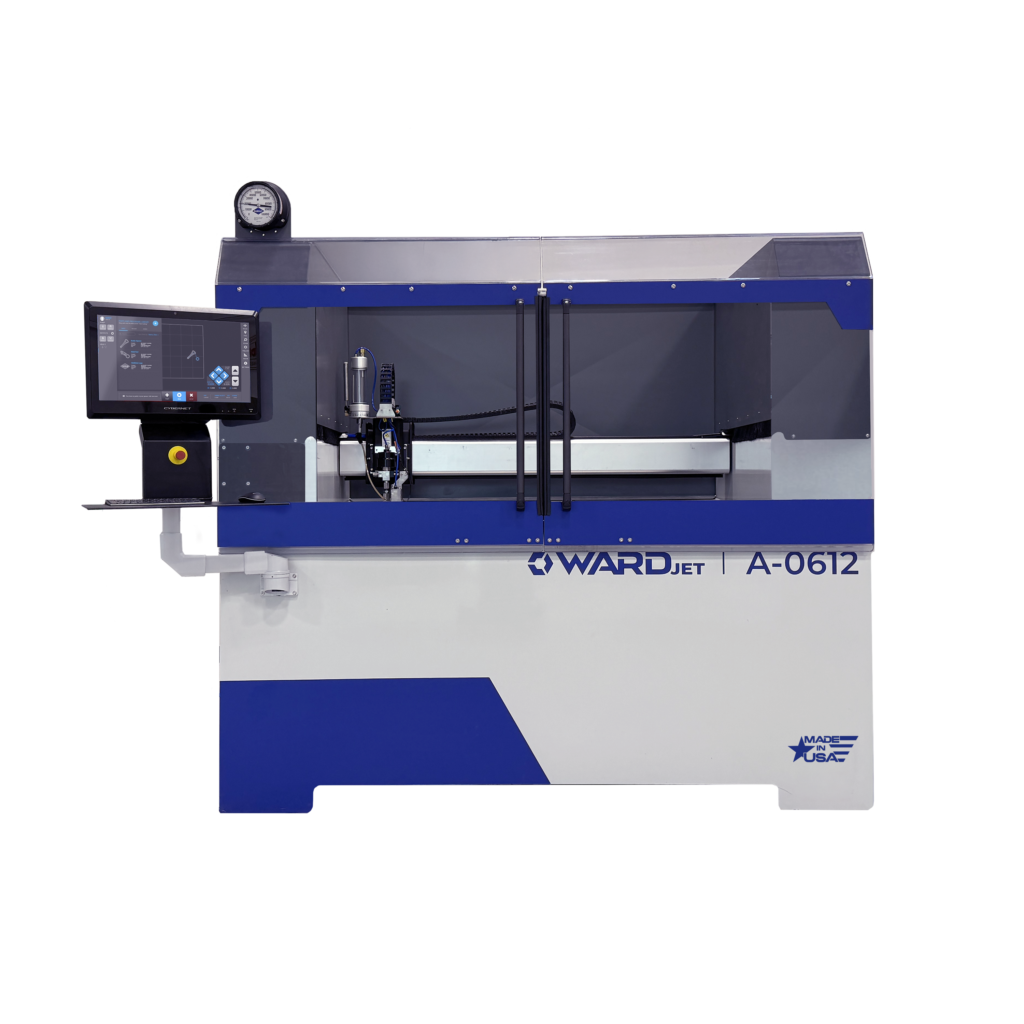
Small-format waterjet platforms can be a compelling choice for operations with limited floor space, lower production volumes, or specialized part requirements. Likewise, water-only systems can open up new capabilities for shops processing softer materials without the need for abrasive cutting.
On the other end of the spectrum, five-axis cutting continues to attract attention for shops working with thick materials and complex geometries. Five-axis capability expands what manufacturers can produce, particularly when bevels, angled cuts, or intricate three-dimensional profiles are required. For some operations, custom machine builds may be the best path when standard configurations do not align with the application.
This highlights a broader industry trend: machine selection is becoming more application-driven and less one-size-fits-all.
Looking Ahead: Sensors, Software, and Five-Axis Optimization
The preview of upcoming developments points to an exciting direction for the industry. Sensor integration, software enhancements, and continued five-axis performance improvements suggest that CNC cutting systems will become even more intelligent, efficient, and adaptable.
Sensors can help operators monitor performance, improve consistency, and potentially reduce manual intervention. Software updates are likely to keep refining workflow speed, usability, and programming precision. And as five-axis systems continue to evolve, manufacturers can expect better optimization for thick-part cutting and more advanced part capability overall.
For shops considering future investments, these developments are worth watching closely. The next generation of cutting performance will not come from one breakthrough alone, but from the combined improvement of machine intelligence, motion control, and process visibility.
Key Takeaways for Manufacturers and Fabricators
The biggest lesson from this year’s discussions is that high-performance cutting depends on a balance of machine capability, software workflow, material knowledge, and day-to-day operational discipline.
Manufacturers evaluating CNC waterjet or router solutions should focus on a few core areas:
- Align machine type and configuration with actual production needs
- Use programming software as a strategic advantage, not just a setup tool
- Develop material-specific cutting practices for better quality and consistency
- Prioritize maintenance, dust collection, and water quality as part of long-term performance
- Keep an eye on emerging technologies that can improve efficiency and expand capability
Shops that approach cutting this way are better positioned to improve quality, reduce waste, and make smarter capital decisions.
👉 Learn more, request a demo, or get support from the WARDJet team:
https://www.wardjet.com/get-a-quote/