


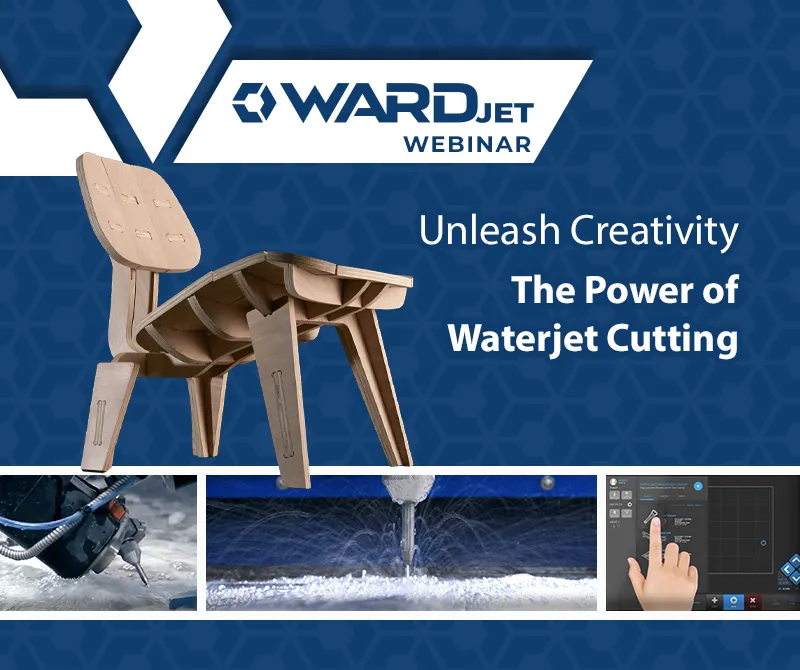
From DXF to Finished Product: Cutting a Flat Pack Chair with Waterjet Technology
Modern manufacturing is increasingly defined by flexibility—being able to take a digital design and efficiently translate it into a high-quality physical product. While CNC routers have traditionally dominated wood processing, abrasive waterjet technology is opening new possibilities for cutting wood and composite materials with precision and minimal tooling constraints.
In this project, WARDJet and AXYZ application specialists demonstrate how to convert a flat pack chair design into a fully optimized waterjet cutting program. From importing a DXF file to final assembly, the process highlights both the power of advanced CAD/CAM software and the practical considerations of cutting plywood with a waterjet system.
Bridging the Gap: From Router Files to Waterjet-Ready Geometry
Many manufacturers already have libraries of router-ready files, but those designs often require modification before they can be used with a waterjet system.
The process begins with importing a DXF file of the flat pack chair into iGEMS CAD/CAM software. While the geometry may appear ready for production, router-specific features—particularly dog bones—must be removed. These features are designed to compensate for the round cutting tools used in routing but are unnecessary (and even undesirable) in waterjet cutting, which can produce sharp internal corners.
Beyond removing dog bones, the team focuses on geometry cleanup. DXF files frequently contain excessive segmentation or irregular linework, which can lead to inefficient toolpaths and reduced cut quality. Using CAD tools within iGEMS, the geometry is rebuilt and simplified to ensure smooth, continuous cutting paths.
Designing for Fit: Material Thickness and Slot Adjustments
Flat pack furniture relies heavily on tight-fitting joints. One of the most critical steps in the workflow is ensuring that slots and tabs are properly sized for the material being used.
In this case, the chair is cut from 3/4″ plywood, but nominal material thickness doesn’t always match actual thickness. Adjustments are made in the CAD environment to ensure proper fit, accounting for:
- Real material thickness
- Kerf width of the waterjet stream
- Desired friction fit or assembly tolerance
This step is essential—without it, even perfectly cut parts may fail during assembly.
Maximizing Efficiency: Nesting Strategies for Material Utilization
Material cost is a significant factor in any manufacturing operation. To minimize waste, the parts are nested within the available sheet of plywood using iGEMS.
Effective nesting considers:
- Part orientation
- Grain direction (important for wood aesthetics and strength)
- Spacing between parts
- Machine constraints
By optimizing layout, manufacturers can significantly improve yield from each sheet, reducing both material costs and environmental impact.
Toolpath Generation: Precision Meets Strategy
Once geometry and nesting are complete, the next step is generating the toolpath.
This involves selecting appropriate cutting parameters, including:
- Cutting speed
- Abrasive flow rate
- Piercing method
- Lead-ins and lead-outs
Unlike traditional cutting methods, waterjet systems require careful balancing of these parameters to achieve clean edges without excessive taper or material damage.
The team also demonstrates toolpath ordering, which plays a crucial role in maintaining part stability during cutting. Features such as:
- Tabs
- Z pop-ups
- Strategic cut sequencing
help prevent smaller parts from shifting or floating once they are fully cut free.
Managing Taper: Advanced Cutting Head Capabilities
One of the unique aspects of waterjet cutting is taper—the slight angle that can occur as the jet exits the material.
To address this, advanced waterjet systems use dynamic cutting heads that compensate for taper in real time. This ensures:
- Straight edges
- Improved fit between parts
- Higher overall accuracy
For applications like flat pack furniture, where precision directly impacts assembly, taper compensation can make a significant difference.
From Digital to Physical: Machine Setup and Cutting
With the toolpath complete, the program is converted into G-code and sent to the CNC waterjet system.
The setup process includes:
- Loading and securing the plywood sheet
- Verifying material alignment
- Selecting the appropriate orifice and nozzle
- Choosing the correct abrasive type and flow rate
Cutting wood with a waterjet differs from cutting metals. While the process is highly effective, operators must account for the interaction between water and the material.
During the cutting demonstration, the system produces clean, precise cuts, showcasing the versatility of waterjet technology—even on materials traditionally associated with routers.
Cutting Wood with Waterjet: Practical Considerations
Although waterjet cutting offers many advantages, wood introduces unique challenges due to its porous and organic nature.
Moisture Management
Water exposure is inevitable, so operators must manage:
- Absorption during cutting
- Post-cut drying time
- Potential swelling or warping
Abrasive Selection
Choosing the right abrasive is critical for achieving clean cuts without excessive wear or material damage. Garnet is commonly used, but flow rate and mesh size should be optimized for wood applications.
Edge Quality
Waterjet cutting can produce smooth edges, but parameter tuning is essential to avoid:
- Fiber tear-out
- Surface roughness
- Over-saturation
With the right setup, waterjet systems can deliver excellent results on plywood and similar materials.
Post-Processing and Assembly: Bringing the Design to Life
After cutting, parts are removed and allowed to dry if necessary. Proper handling during this stage helps prevent deformation and ensures consistent assembly.
The final step is assembling the chair—a process that reveals the true success of the workflow.
During assembly, the team evaluates:
- Fit between joints
- Structural stability
- Ease of assembly
Some challenges are encountered, offering valuable insights into design refinement and tolerance adjustments. These lessons are especially useful for manufacturers attempting similar projects for the first time.
Key Takeaways for Manufacturers and Fabricators
This project highlights several important considerations for anyone exploring waterjet cutting for wood applications:
1. Not All CAD Files Are Ready for Waterjet
Router-based designs often require modification, particularly the removal of dog bones and cleanup of geometry.
2. Material Accuracy Matters
Always verify actual material thickness and adjust designs accordingly to ensure proper fit.
3. Nesting Drives Efficiency
Optimized layouts can significantly reduce material waste and improve profitability.
4. Toolpath Strategy Is Critical
Cut sequencing, tabs, and parameter selection all impact final part quality and stability.
5. Waterjet Can Effectively Cut Wood
With the right setup and considerations, waterjet systems offer a viable alternative to traditional woodworking methods.
6. Expect a Learning Curve
From moisture management to assembly tolerances, real-world testing is key to refining the process.
Expanding Possibilities with Waterjet Technology
This flat pack chair project demonstrates more than just a successful cut—it showcases the adaptability of waterjet technology across materials and applications.
For manufacturers already working with wood or composites, integrating waterjet cutting can unlock new capabilities, including:
- Greater design freedom
- Reduced tooling constraints
- Improved precision on complex geometries
By combining robust CAD/CAM software like iGEMS with advanced CNC waterjet systems, businesses can streamline workflows from concept to finished product.
Ready to Get Started?
Whether you’re exploring waterjet cutting for the first time or looking to expand your current capabilities, having the right tools and expertise makes all the difference.
👉 Learn more, request a demo, or get support from the WARDJet team:
https://www.wardjet.com/get-a-quote/