


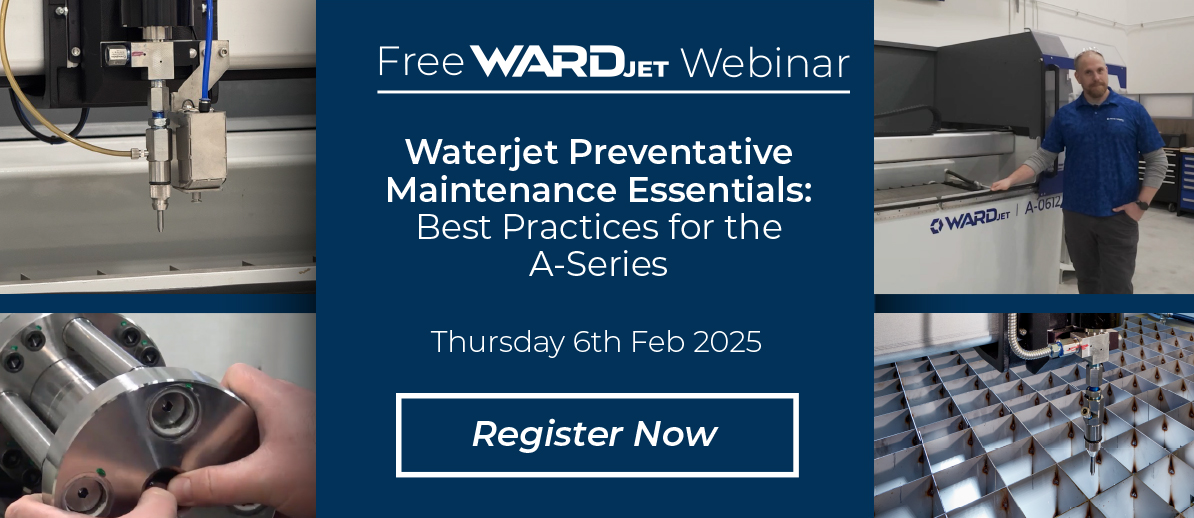
Keeping the WARDJet A-Series Running Strong: 2025 Updates and Preventive Maintenance Best Practices
In any fabrication shop, machine uptime is more than a convenience—it directly affects productivity, part quality, delivery schedules, and profitability. Even the most capable cutting system can lose efficiency if routine maintenance is overlooked. For operations relying on compact equipment to maximize floor space without sacrificing performance, that makes preventive maintenance especially important.
The WARDJet A-Series compact CNC waterjet system is designed to bring the cutting capabilities of a larger waterjet platform into a smaller footprint. It is a practical solution for shops that need precision cutting while working within tighter space constraints. With the latest 2025 updates, the A-Series continues to evolve, offering improvements that support ease of operation, maintenance, and overall reliability.
Just as important as the machine’s design is the way it is maintained. Regular inspections, lubrication, cleaning, and system checks help protect critical components, reduce unplanned downtime, and preserve consistent cutting performance. Understanding how to perform these tasks correctly can make a meaningful difference in the day-to-day health of the machine.
Why Preventive Maintenance Matters in Waterjet Cutting
Waterjet cutting systems operate in demanding environments. Moisture, abrasive, high-pressure plumbing, motion systems, and debris all interact continuously during production. Over time, contamination buildup, insufficient lubrication, or unnoticed wear can affect motion accuracy and place unnecessary strain on components.
A strong preventive maintenance routine helps shops:
- Reduce unexpected downtime
- Extend the life of machine components
- Maintain positioning accuracy and cut quality
- Identify wear or leaks before they become larger issues
- Improve overall machine reliability in production settings
For manufacturers and fabricators, these benefits translate into fewer disruptions and more predictable output. Preventive maintenance is not simply about avoiding failure—it is about protecting performance.
A Compact Waterjet Built for Serious Production
The WARDJet A-Series is built for shops that need the versatility and precision of waterjet cutting in a compact platform. That makes it a strong fit for smaller production spaces, job shops, prototyping environments, and operations looking to add waterjet capability without dedicating the footprint required by a larger system.
Despite its compact size, the A-Series is engineered to deliver the core benefits manufacturers expect from a CNC waterjet system: accurate cutting, material versatility, and dependable operation. It can support a wide range of applications across metal fabrication, composites, stone, plastics, foam, and other industrial materials.
Its appeal lies in balancing performance with practicality. For many businesses, that balance is critical. A compact machine must do more than fit the floorplan—it must perform consistently, remain serviceable, and support efficient production over time.
What’s New in the 2025 WARDJet A-Series
The 2025 A-Series updates reflect a continued focus on usability and machine efficiency. These enhancements are designed to improve the operator experience while supporting maintenance access and production readiness.
Improved Enclosure Design
One of the notable updates involves enclosure improvements. Better enclosure design can contribute to cleaner operation, improved protection of motion components, and easier access during maintenance. In waterjet systems, protecting key components from contamination is essential, and enclosure refinements can play a major role in preserving long-term machine health.
Increased Abrasive Hopper Capacity
The updated abrasive hopper capacity is another practical improvement. Greater capacity can reduce the frequency of refilling during production, helping operators maintain workflow and minimize interruptions. In busy shops, even small reductions in handling time can improve overall efficiency over the course of a shift.
Updated Drive and Motor System
Drive and motor system enhancements also support the machine’s performance and reliability. Motion system refinements can help ensure smoother operation and provide the consistent movement needed for accurate cutting. For users focused on maintaining part quality and repeatability, these kinds of updates are highly relevant.
Together, these improvements reinforce the A-Series as a compact system built not just for cutting capability, but for everyday shop use.
Core Preventive Maintenance Tasks Every Operator Should Know
Routine maintenance on the A-Series centers on a few critical areas: the rack and rail systems, linear bearings, Z-axis lubrication, high-pressure plumbing, and daily or weekly inspection points. Each area contributes directly to machine accuracy, component longevity, and safe operation.
Cleaning and Greasing Rack and Rail Systems
Rack and rail systems are essential to smooth and accurate machine movement. Over time, grease can collect contamination, and debris from the operating environment can accumulate on drive surfaces. If left unaddressed, that buildup may affect motion performance and accelerate wear.
Cleaning old grease and contamination from the rack before applying fresh lubricant is a key step. Proper regreasing helps protect the drive mechanism and supports consistent travel along the axis. This process should be performed carefully and consistently as part of the maintenance schedule.
The gantry rack and rail require the same level of attention. Because these components are central to machine positioning, keeping them clean and properly lubricated helps maintain precision and reduce mechanical stress.
Servicing Linear Bearings and Rails
Linear bearings and rails also require regular lubrication to perform correctly. These components guide machine motion and help maintain stable, accurate travel. Insufficient lubrication can lead to increased friction, wear, and reduced movement quality.
Greasing the linear bearings and rails at the recommended intervals helps ensure smooth operation and protects against premature component degradation. It is a straightforward maintenance task, but one that has a major impact on long-term system health.
Z-Axis Ball Nut Lubrication
The Z-axis plays a critical role in vertical motion and cutting head positioning. Ball nut lubrication is essential for keeping that motion responsive and reliable. Neglecting this area can lead to unnecessary wear and reduced movement performance over time.
Consistent lubrication of the Z-axis ball nut supports accurate motion and helps preserve the integrity of the assembly. For operators and maintenance teams, this is one of the small tasks that can deliver outsized benefits when performed regularly.
On/Off Actuator Maintenance
Maintaining the on/off actuator is another important part of the preventive maintenance process. Reliable actuator function supports proper cutting operation and system responsiveness. Routine inspection and servicing help ensure this component continues to perform as expected during production.
High-Pressure System Checks: A Critical Part of Reliability
Waterjet cutting depends on high-pressure performance, so regular inspection of high-pressure components is essential. This includes checking lines, inspecting weep holes, monitoring for leaks, and purging air from the system when needed.
Inspecting High-Pressure Lines and Weep Holes
High-pressure lines must be observed carefully for signs of wear or leakage. Weep holes can provide an early indication of component issues, making them an important inspection point during routine maintenance. Spotting a problem early can prevent more serious failures and reduce the risk of unscheduled downtime.
Purging Air from High-Pressure Lines
Air in the high-pressure system can affect performance and should be purged according to proper procedures. This helps maintain consistent operation and supports overall system stability. Like many maintenance activities, this step is most effective when it becomes part of a regular and disciplined routine rather than a reaction to performance issues.
Daily and Weekly Checks That Support Peak Performance
Some of the most valuable maintenance habits are also the simplest. Daily and weekly checks create opportunities to catch issues early and keep the system production-ready.
These checks include:
- Weekly abrasive breather maintenance
- Daily pump inspections
- Filter checks
- General leak observation
- Visual inspection of protective components such as bellows
Bellows inspection is particularly important because these protective elements help shield machine components from contamination. If bellows are damaged or compromised, debris and moisture may reach parts that should remain protected.
By building these checks into standard operating routines, shops can create a more proactive maintenance culture and reduce the chance of problems escalating unnoticed.
The Value of Service Support and Expert Inspection
Even with a solid in-house maintenance program, professional service support remains valuable. Preventive maintenance service options can help shops go beyond routine upkeep by identifying deeper issues, verifying system condition, and addressing repair needs before they affect production.
A trained technician can inspect or repair areas that may require more advanced evaluation, helping shops maintain confidence in machine condition and performance. For many operations, combining daily operator care with scheduled professional service is the most effective path to long-term reliability.
Final Thoughts
The WARDJet A-Series continues to stand out as a compact CNC waterjet solution that delivers serious cutting capability in a space-efficient package. With the 2025 updates, the platform becomes even more practical for modern fabrication environments focused on uptime, accuracy, and operational efficiency.
But machine design is only part of the equation. Preventive maintenance is what keeps that performance consistent. From cleaning and greasing rack and rail systems to lubricating linear bearings, checking high-pressure lines, and completing daily and weekly inspections, these essential tasks help protect the machine and the productivity it supports.
For waterjet operators, shop owners, maintenance teams, and production managers, a disciplined maintenance routine is one of the smartest investments they can make in long-term equipment performance.
👉 Learn more, request a demo, or get support from the WARDJet team:
https://www.wardjet.com/get-a-quote/